It has been about 5 weeks since the Pyramid Fire closed access to the search sites. I continued to monitor the fire’s progress and watched the “percent contained” number rise on a daily basis. Having lived through the 2020 Beachie Creek Fire, I was concerned about a wind event stoking the smoldering brush and litter fire into a major conflagration that would obliterate the sites. Fortunately, the weather cooled, we had some rain and the fire crews were able to get the blaze under control. When I checked the fire map on Friday the 30th, the fire was 98% contained and the fire closure area had shrunk considerably. According to the map the sites were open to access again.
I drove out with the dog Saturday morning hoping that the ground reality tracked with the map. After the 90 minute drive from Salem, I pulled off HWY 20 and onto Soda Fork Rd. Some opening weekend elk hunters were camped at the junction of Soda Fork and the 2043 road; a positive sign of open access. I held my breath approaching the gate at Section 19, and it was chained open. I drove up to the Lee site landing and headed into the woods.
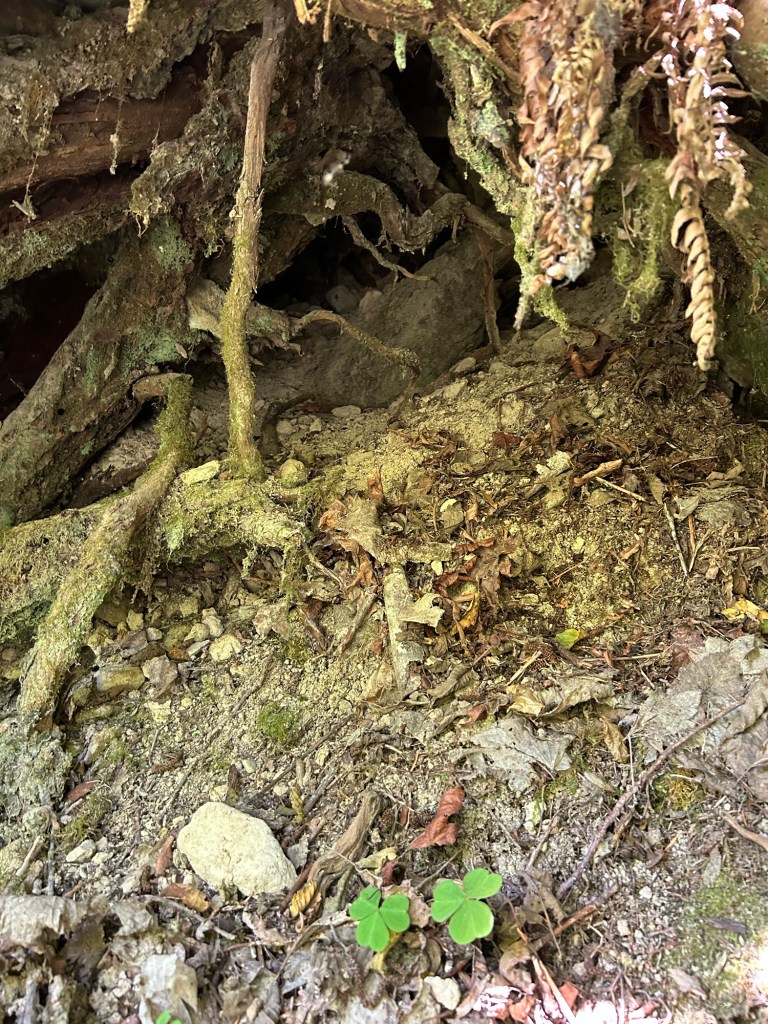
Down the hill and across the bench I made my way to the cedar where the bottle was located. I paused here to reorient myself to the ground. After 5 weeks away, a pause before moving on was worth the time. Memory can bend and warp, and examining the ground as it is with GPS records is useful in developing the day’s plan. I stood slightly uphill from the cedar and the bottle, surveying the ground. If this was the approximate crime scene, I decided to search the furthest southern portion of the hill side, and adjacent to where I searched on 29 June 2024. I dropped down the hill and began to grid search where the hill cliffed out above the creek.
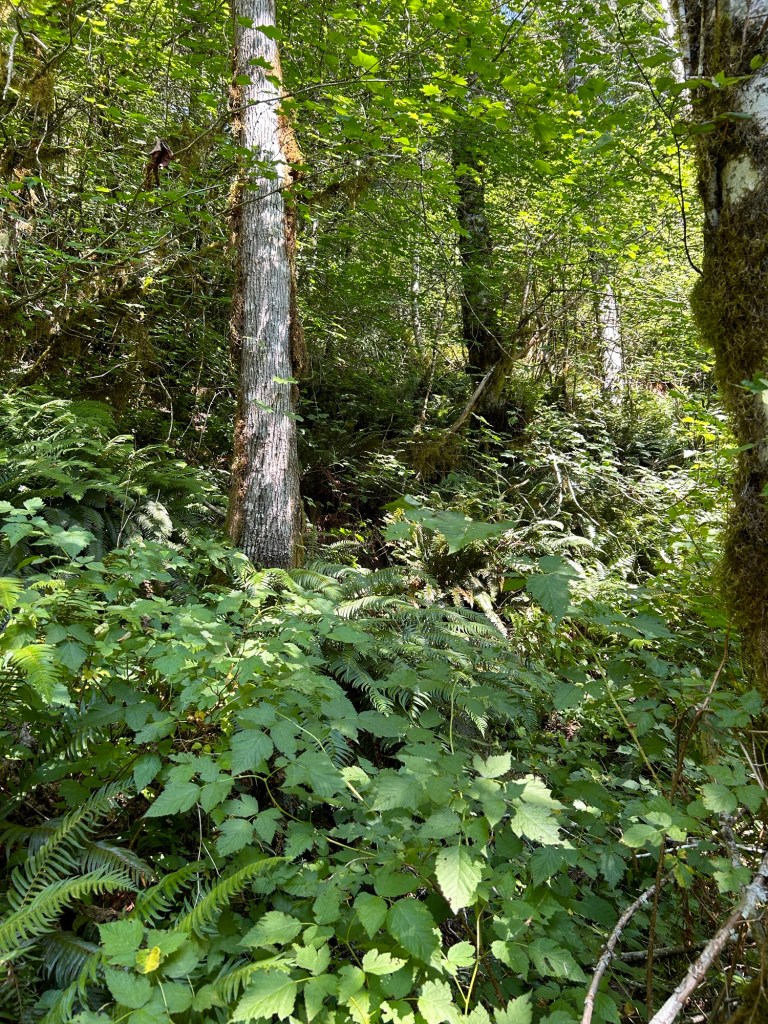
The hillside was a series of small, narrow benches, about 20 feet apart, connected by drainage chutes. Overlapping with the 29 June search area, I cleared the first bench, then each drainage chute leading up to the next bench. At this point I would drop down, grab my pack, walk up to the next bench and repeat.
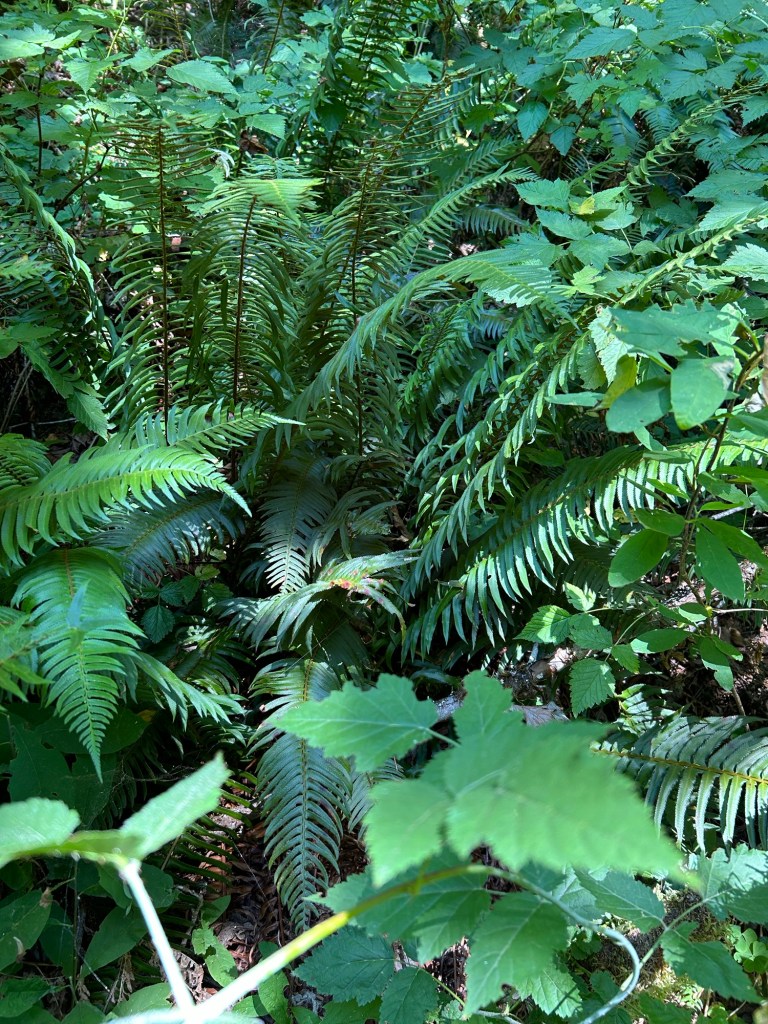
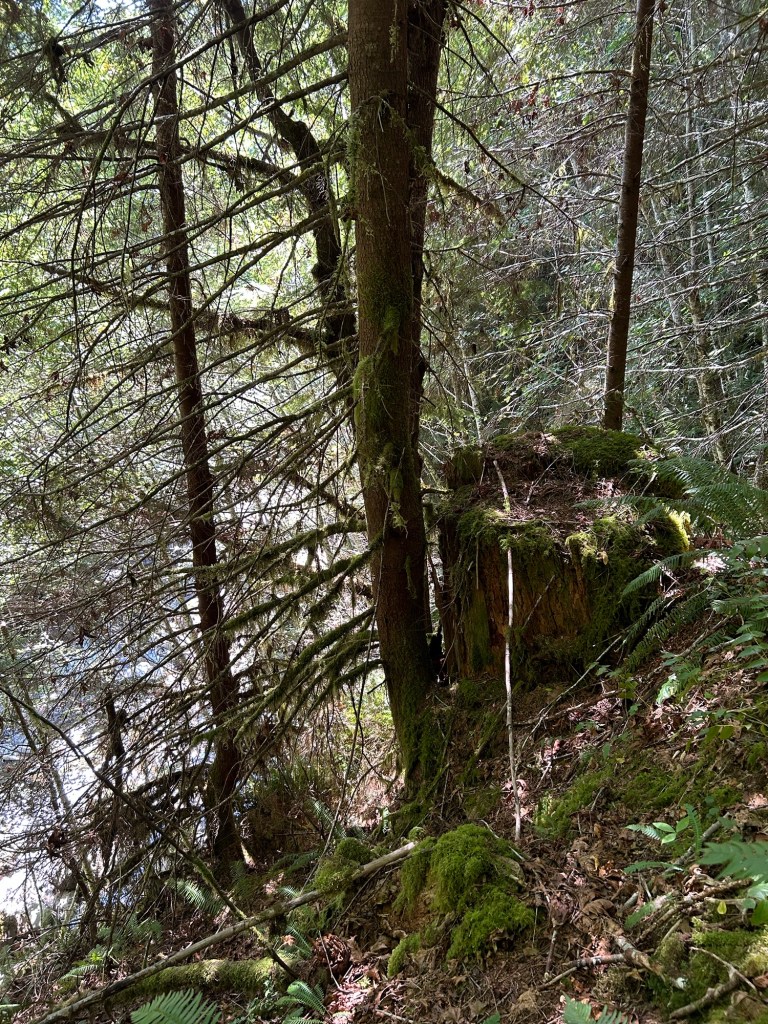
As usual, it is slow, methodical and physically demanding work. The hill is steep enough that it is easier to go up on your hands and knees than upright on two legs. Once the bench was cleared, I would then work up the drainage chutes, clearing away the leaf litter and woody debris. The larger branches and logs would get launched downslope, out of the way of where I was going. The sounds of the creek rushing by were occasionally joined by the rumble and clank of a diesel truck towing a low-boy loaded down with an excavator, removing equipment from the fire line.
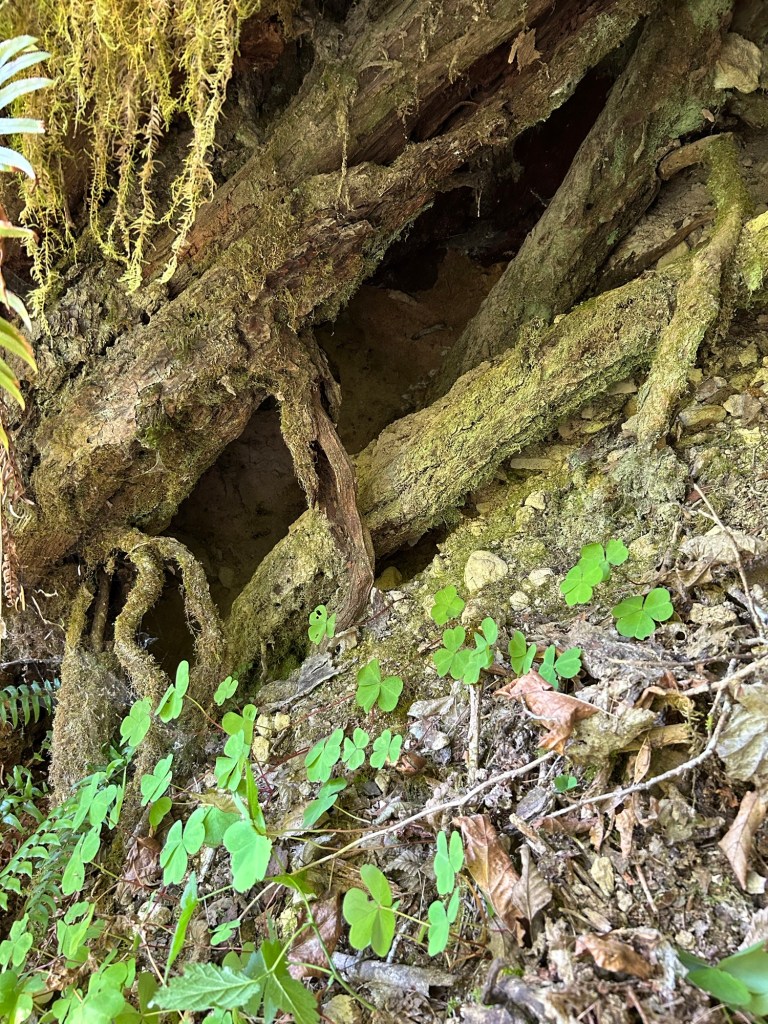
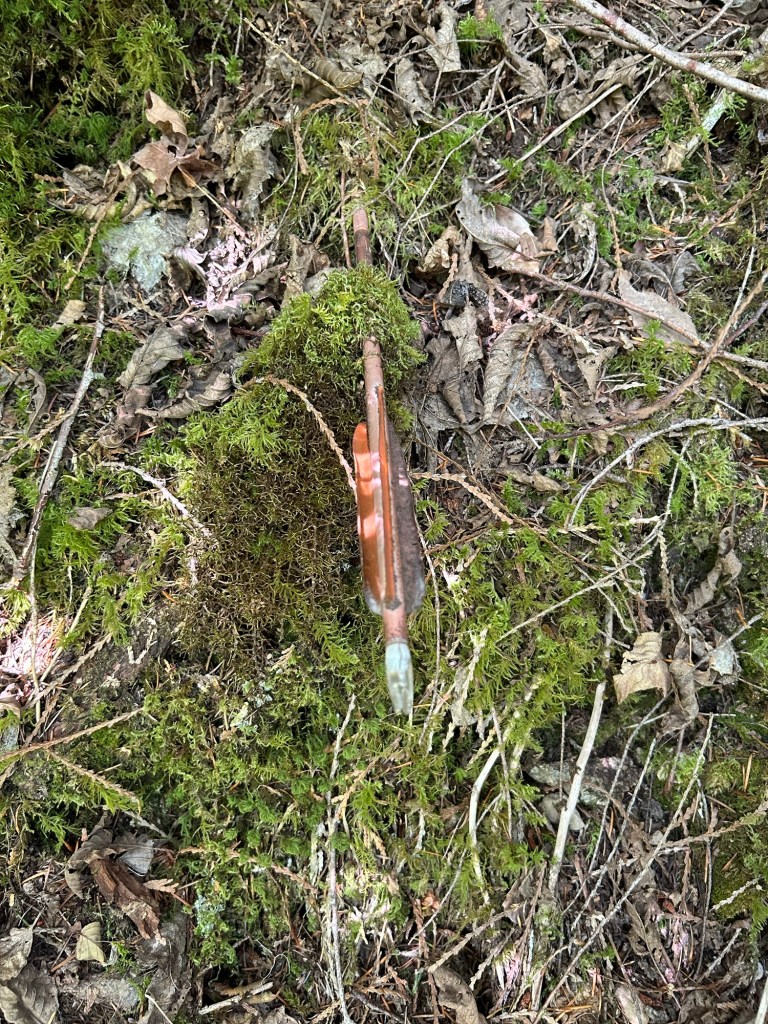
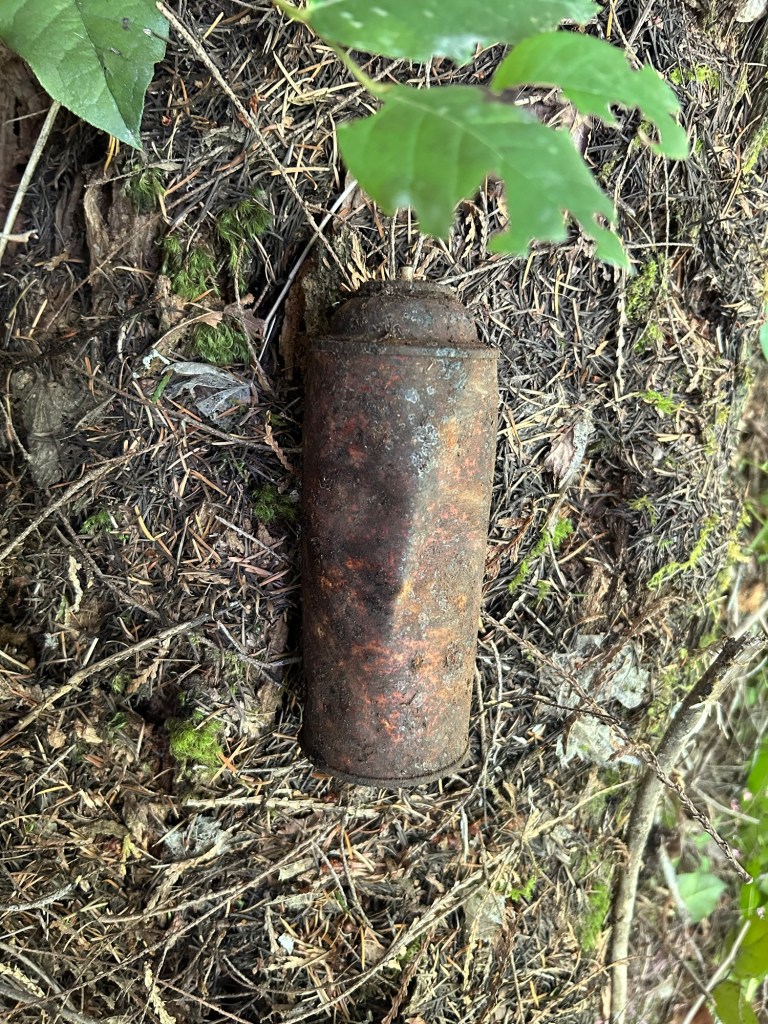
If one were to just walk across the ground, it would appear to be devoid of anything not of the forest. Clearing away the ground debris, one finds all kinds of evidence of human presence. This search turned up an Easton aluminum hunting arrow, and further up the hill in a drainage chute, a spray paint can. Looking back from the fletching of the arrow as it protruded from the ground, I could see where the hunter stood when he loosed his bow. The paint can was a good indicator that yes, debris from the roadway will make its way downhill by these drainage lines.
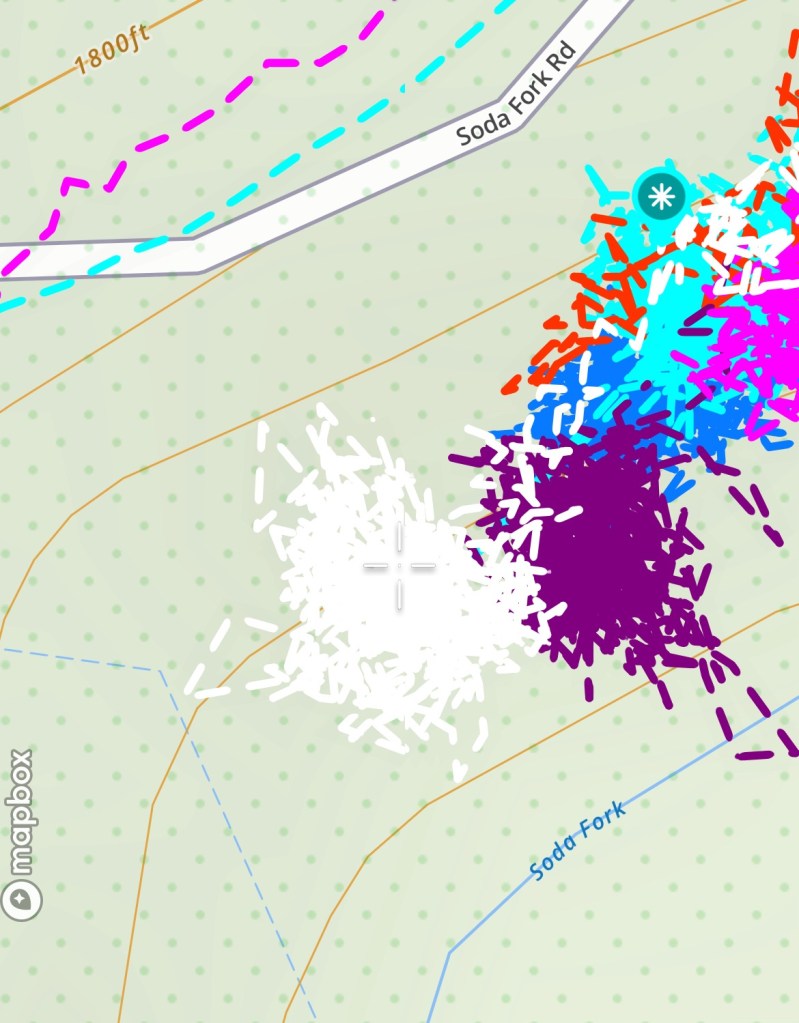
After 3 1/2 hours I reached the last bench that was level with the cedar and the bottle. My next search will be on the other side of the 29 June search area, and the following ones will continue north until I connect with the areas I searched in 2023. I had crawled 2.3 miles, crisscrossing the slope in 100 degree heat. Not a bad day’s work.

 The Search for Karen Jean Lee and Rodney L. Grissom